Introduction
The headlines have been impossible to ignore.
Amazon. Meta. Google. Cisco. Intuit. One after another, some of the biggest names in tech have announced mass layoffs in 2026 — and nearly all of them have named the same culprit: Artificial Intelligence.
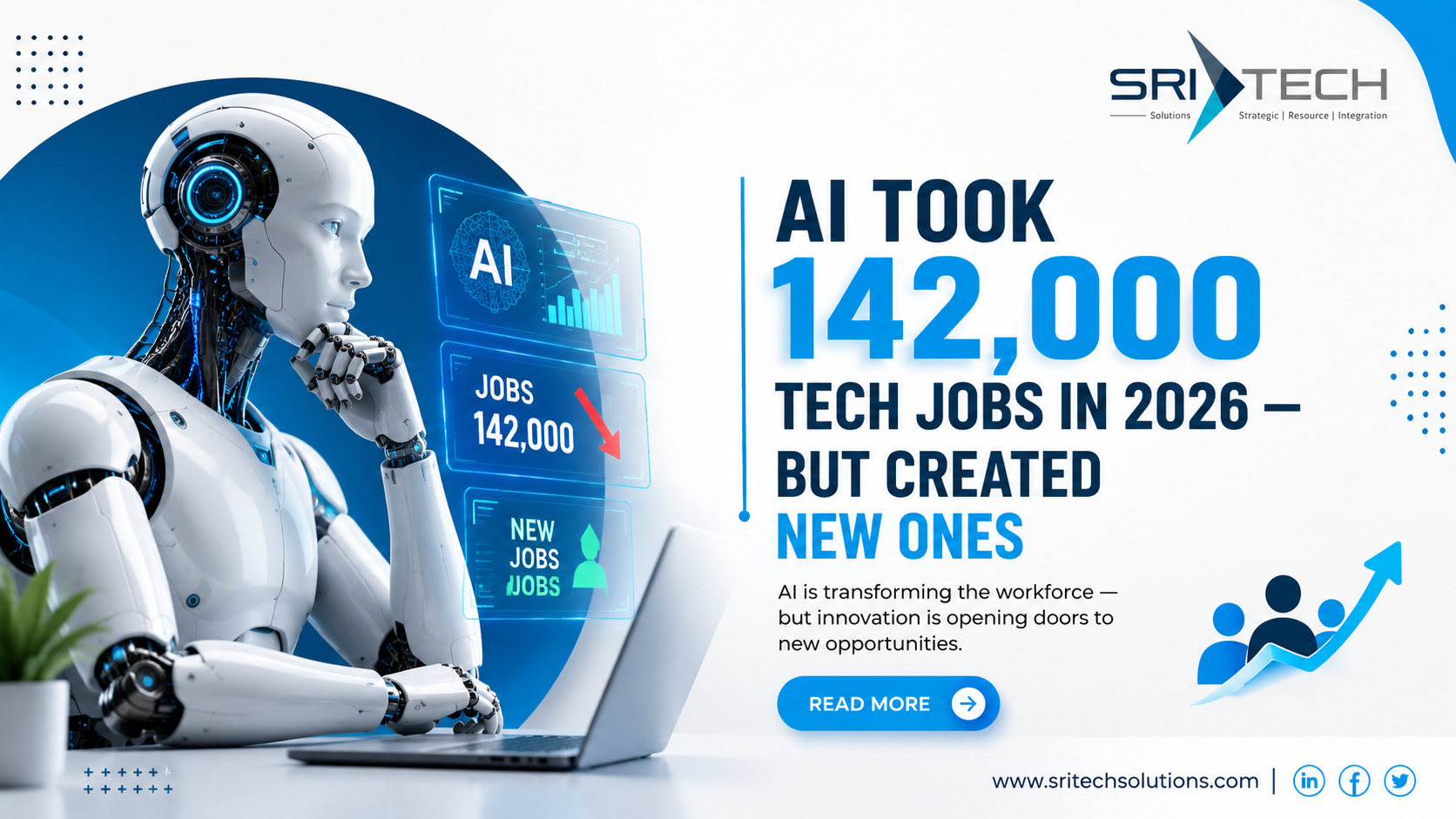
By mid-2026, the US tech sector had already cut 142,000 jobs year-to-date, with companies openly redirecting those headcount budgets straight into AI infrastructure. The Bureau of Labor Statistics’ June 2026 payroll report shocked markets — only 57,000 jobs were added nationwide, the lowest monthly figure since the 2024 slowdown.
It’s easy to look at those numbers and feel anxious about the future.
But here’s what the alarming headlines are leaving out: AI is not just destroying jobs — it is actively creating entirely new categories of work that didn’t exist just two years ago. LinkedIn’s Economic Graph recorded 1.3 million new AI-related jobs added in just two years. The demand for AI-skilled professionals has never been higher.
The real story of 2026 isn’t that AI is replacing people. It’s that AI is replacing certain tasks — and creating massive new opportunities for those who know where to look.
In this article, we break down exactly which jobs are disappearing, which new roles are emerging, and what you need to do right now to stay ahead.
Why Are So Many Tech Jobs Disappearing?
To understand the opportunity, you first need to understand what’s actually happening.
Companies are not cutting jobs because they’re struggling. Many of them are thriving. Cisco cut 4,000 jobs (5% of its workforce) while reporting better-than-expected revenue. Cloudflare laid off 1,100 people — roughly 20% of its workforce — in the same quarter it posted its highest-ever revenue of $639 million.
So why cut staff when business is booming?
The answer is what workforce analysts are now calling the “AI employment paradox.” Companies are simultaneously:
- Eliminating roles where AI can now do the same work faster and cheaper
- Pouring billions into AI tools, infrastructure, and talent
- Reporting higher productivity with fewer people
The roles most at risk are those built around routine, repetitive, or process-driven tasks — data entry, basic content creation, customer support, QA testing, and administrative coordination. Studies predict that 80% of customer service roles could eventually be automated, and around 65% of data processing tasks could be handled by AI systems.
Entry-level roles have been hit especially hard. Postings for junior developer positions have dropped sharply as AI coding assistants now absorb work that previously justified a first full-time hire.
The Jobs AI Is Creating Right Now
Here’s where the narrative shifts — and where your opportunity lives.
The very companies cutting old roles are hiring aggressively for new ones. The skills needed to build, monitor, secure, and improve AI systems are in critically short supply. ManpowerGroup’s 2026 Talent Shortage Survey put AI skills at the top of the “hardest to fill” list globally for the first time, with roughly 72% of employers saying they still cannot find the technical talent they need.
These are the roles growing fastest right now:
1. AI/ML Engineers and Prompt Engineers
Companies need people who can build, fine-tune, and deploy AI models. Prompt engineering — crafting inputs that get the best results from large language models — has evolved from a niche skill into a full-time, well-paid role. Demand is exploding across finance, healthcare, retail, and logistics.
2. AI Safety and Ethics Specialists
As governments worldwide begin regulating AI (the US Commerce Department’s emergency export controls on AI models in June 2026 were a landmark moment), companies urgently need professionals who can evaluate AI for bias, risk, and compliance. This is a brand-new discipline with very few qualified candidates — which means strong compensation for early movers.
3. Machine Learning Operations (MLOps) Engineers
Getting an AI model built is one thing. Getting it to run reliably in production, at scale, without breaking — that’s an entirely different and highly specialized challenge. MLOps engineers bridge the gap between data science and software engineering, and they are among the highest-compensated IT professionals in the market right now.
4. Cybersecurity AI Specialists
Here’s an irony 2026 will be remembered for: the same class of AI model the US government restricted over cybersecurity fears also discovered a 29-year-old critical software vulnerability that every human security team had missed for three decades. AI is both a threat and a defense tool. Companies need cybersecurity professionals who understand how to deploy AI for threat detection, vulnerability scanning, and incident response. Cybersecurity demand is currently outpacing every other vertical in IT staffing.
5. AI Data Infrastructure Engineers
AI models are only as good as the data feeding them. Data engineers who can build, clean, and manage the pipelines that power enterprise AI systems are in extraordinary demand — with senior platform engineers clearing compensation packages that would have been unthinkable just 24 months ago.
6. Human-AI Collaboration Roles
Not every new AI role is purely technical. Companies need project managers, business analysts, and operations specialists who understand how to integrate AI tools into real workflows — coordinating between AI systems and human teams, translating technical output into business decisions, and ensuring AI projects actually deliver ROI.
What the Data Is Telling Us About Salaries
The market is splitting into two tracks, and the data is stark.
According to PwC’s 2026 Global AI Jobs Barometer — which analysed over a billion job postings across six continents — jobs that have been “professionalised” by AI are growing twice as fast as jobs being replaced, with 42% faster wage growth since 2021.
Meanwhile, productivity at companies most exposed to AI is running 40% higher than at companies least exposed — and those same companies are raising both wages and headcount faster than their competitors.
The message is clear: AI is not flattening the market. It is raising the ceiling dramatically for those with the right skills — while compressing opportunity at the lower end for those who are not adapting.
At SRI Tech Solutions, we are already seeing this in real-time placements. Senior AI-skilled professionals are commanding compensation that clients weren’t budgeting for even a year ago. The candidates winning offers are those who have paired their core technical expertise with at least working fluency in AI tools relevant to their domain.
How to Future-Proof Your IT Career Right Now
Whether you are actively job hunting or currently employed, here are four concrete steps to protect and advance your career in the age of AI:
1. Get AI-certified in your current stack.
Cloud professionals should pursue AWS AI/ML or Azure AI certifications. ServiceNow professionals should look at AI capabilities within the Now Platform. Whatever your specialty, find where AI intersects with it — and get credentialed there.
2. Learn to work with AI tools, not against them.
The workers finding new roles fastest in 2026 are those pivoting into AI-adjacent positions — not running from AI, but becoming the people who direct, audit, and improve it. Get hands-on with tools like GitHub Copilot, enterprise AI assistants, and automation platforms.
3. Develop the skills AI cannot replace.
Leadership, stakeholder management, ethical judgment, and strategic thinking are growing in value. The most AI-exposed junior roles are already 7x more likely to demand traditionally senior skills like leadership. Start building those capabilities now.
4. Partner with a specialized IT staffing agency.
In a market moving this fast, visibility matters. Companies with urgent AI-related hiring needs go to specialized staffing partners — not job boards — because the talent they need is rarely actively applying. Being in the right network puts you in front of opportunities before they’re ever posted publicly.
The Bottom Line
Yes, AI has taken 142,000 tech jobs in 2026. That is real, and it is not slowing down.
But the same wave that is eliminating routine roles is generating extraordinary demand for a new class of IT professionals who can build, operate, secure, and govern AI systems. The talent shortage in these areas is severe — and it is creating one of the strongest compensation environments for skilled IT professionals in years.
The question is not whether AI will change your career. It already is. The question is whether you are positioned to move with it — or get left behind.
Ready to Take the Next Step?
At SRI Tech Solutions, we specialize in connecting top IT talent with the US companies actively hiring in AI, cybersecurity, cloud, and ServiceNow right now. Whether you’re a candidate exploring your next move or a company building an AI-ready team, we’ve been placing the right people in the right roles for over 20 years.
📩 Contact us today to speak with a staffing specialist — or browse our current openings to find your next opportunity.
Published by SRI Tech Solutions | US IT Staffing Agency | Tampa, FL
Sources: Bureau of Labor Statistics June 2026 Report | PwC 2026 Global AI Jobs Barometer | ManpowerGroup 2026 Talent Shortage Survey | TechCrunch AI Layoffs Tracker | Staffing Industry Analysts US Forecast March 2026 | KORE1 IT Staffing Trends 2026